
Municipalities’ First Council Sittings: What the Law Says?
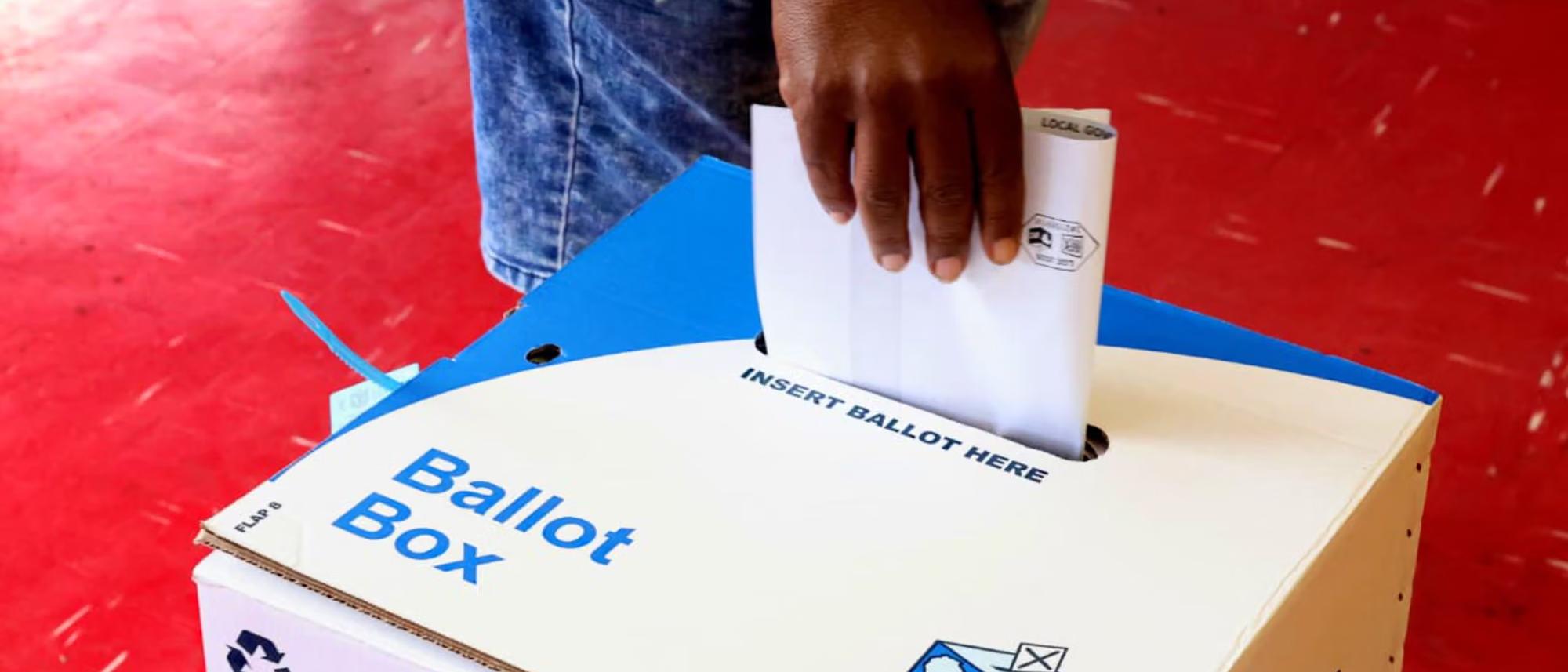
Now that South Africa’s 2026 Local Government Elections (LGEs) have concluded, attention shifts to who governs the municipalities. Given the increase in the number of hung councils from 66 to 127, more attention is now naturally being paid to the process of forming coalitions than in previous election cycles. In terms of the law, newly elected municipal councillors have up to fourteen days after the promulgation of the results to hold their first council meeting. As the results were promulgated on 13 November, the deadline for the first council sittings is 27 November.
Historically, this short timeframe has never been an issue, as it is easier to form governments when there is a majority party, while forming coalition governments requires time and negotiation. However, with the increase in the number of hung councils, fourteen days may or may not be sufficient for political parties to reach an agreement on whom to elect. The growing number of hung councils thus adds to the complexity and scale of the negotiations, potentially prolonging the time needed to reach an agreement. With a record of close to sixty per cent of South Africa’s municipalities having no outright majority, some thought needs to be given to how much time political parties have to negotiate coalitions. The Municipal Structures Amendment Bill, commonly referred to as the Coalitions Bill, would extend the timeframe within which councils must hold their first sitting from fourteen days to thirty days, thereby giving political parties more time to conclude agreements. However, as the situation currently stands, the first council sitting must take place within fourteen days.
To be clear, there is no law that requires political parties to reach a formal coalition agreement, which, after all, is a political process. The law only requires that newly elected councillors hold their first council meeting and duly elect a mayor within the prescribed fourteen-day period. Even if the parties fulfil these legal requirements, without a coalition commanding a majority in the council, the elected mayor risks being little more than a caretaker mayor, causing the instability that residents want to avoid. Hence the importance of having a coalition deal in place before the first council sitting of the term.
Furthermore, the law as it stands makes no provision for an extension of the deadline by either the Minister of Cooperative Governance and Traditional Affairs (COGTA) or the President. Hence, while failure to elect the mayor within fourteen days does constitute a breach of the Municipal Structures Act, it neither invalidates the election of the councillors nor results in the automatic dissolution of the council. Failure to hold the first council meeting does not automatically and immediately give the province or the Minister the power to intervene in the affairs of the council.
Hence, while failure to elect the mayor within fourteen days does constitute a breach of the Municipal Structures Act, it neither invalidates the election of the councillors nor results in the automatic dissolution of the council.
Share this quote
Following the 2026 LGEs, the Department of COGTA issued the Guidelines for Stable Coalitions in Local Government. The document, which is non-binding, was drawn up to help municipalities to deal with the realities and complexities of local government in the context of coalitions. On the issue of the fourteen-day deadline, the guidelines support the provisions of the Coalitions Bill calling for an extension of the deadline for the first council sitting. With regard to the law as it currently stands, the guidelines suggest seeking legal advice in the event that the deadline is missed.
As things stand, the law does not provide for immediate intervention from other spheres of government if this deadline is missed. This is because, notwithstanding the fact that the different spheres must work together, each sphere of government is independently elected and the separation of powers must be enforced. Having said that, Section 139(1) of the Constitution does empower the province to intervene: ‘When a municipality cannot or does not fulfil an executive obligation in terms of the Constitution or legislation, the relevant provincial executive may intervene by taking any appropriate steps to ensure fulfilment of that obligation.’ Part of the challenge lies in the ambiguity of the provisions and the fact that this is essentially a political process: provinces can intervene but at what point should or must they do so? In other words, when does ‘non-fulfilment’ of an executive obligation necessitate intervention: the day after the breach, a month later, or only after several breaches? Guidance on when to intervene can be drawn from judicial precedent, in terms of when to intervene such as in the case of Premier, Gauteng and Others v Democratic Alliance and Others, where the court found that the province can only intervene when it has exhausted other less intrusive measures in good faith.
Part of the challenge lies in the ambiguity of the provisions and the fact that this is essentially a political process: provinces can intervene but at what point should or must they do so?
Share this quote
When such intervention does occur, for example, when councillors have failed to convene a meeting three months after the deadline has passed, it becomes clear that intervention is necessary. Under such circumstances, the Constitution states that the first step would be for the provincial government to issue a directive to the council, essentially instructing the council to fulfil its legislative mandate. Furthermore, the Constitution sets out the steps the provincial government must take when intervening, including issuing written notice to (i) the Minister of CoGTA (ii) the relevant provincial legislature and (iii) the National Council of Provinces. Additionally, the intervention must be approved by the Minister, who can, even after granting approval, terminate the intervention within twenty-eight days. The National Council of Provinces also has the power to reject or withhold its approval of the intervention.
Local government, which deals primarily with basic services, is arguably the least ideological sphere of government, although it is by no means free of ideology. As such, unlike at national or even provincial government, potential coalition partners of different ideological persuasions will not be dealing with polarising and contentious political issues such as foreign affairs, affirmative action, immigration and land reform. Hence, with fewer contentious issues at stake, at local level, the need to extend the deadline for forming a government is, in all likelihood, more pressing at provincial and national level than at local level. In Europe for example, coalition negotiations to form a national government can take months to conclude, as seen in countries such as Spain, Germany, Sweden, the Netherlands and Belgium, where it took a record 541 days of negotiation after the 2010 general elections. Hence, calls to extend the fourteen-day period makes sense at national level, even though in South Africa’s case, the Government of National Unity agreement was concluded within the fourteen-day limit.
It seems that, by seeking to extend the deadline, we are attempting to solve a problem that does not really exist. While there are examples of municipalities missing their deadlines as seen in Nquthu, Jozini, uMngeni and Ditsobotla, such instances are few and far between, and not all of them are due to failed coalition negotiations, as the uMngeni case illustrates. What the deadline does achieve is to create a sense of urgency in addressing the political reality that there will be more than one party in the governing majority. Furthermore, given that political parties themselves anticipate governing in coalitions, there is nothing preventing them from engaging in discussions even before the election. South African political parties have shown maturity when it comes to accepting political realities and forming a government, whether it be at local, provincial or national level. In this regard, allowing more time for negotiations may achieve little other than prolonging political rancour. What is telling is that while there have been some calls to extend the deadline for the first sitting, there has been no widespread demand to do so. Even more telling is the fact that political parties themselves have not been vocal in calling for such an extension. Whether or not the deadline is extended, one thing is clear, South African politics is changing, and likely for good.