
Photo: GCISResearch → Elections What Just Happened? – A Look Back at South Africa’s 2026 Local Government Elections
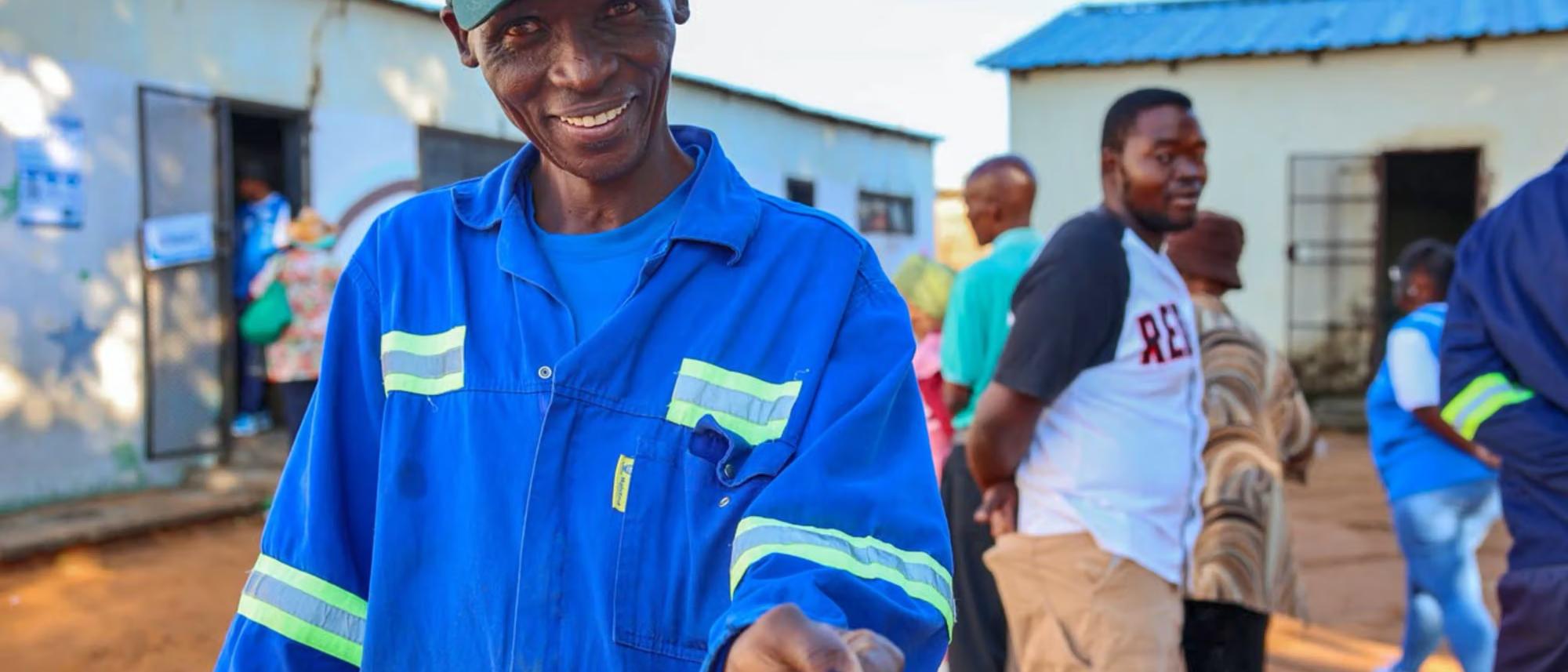
As the dust settles on South Africa’s 2026 local government elections, and parties start to jostle for positions and influence, attention has naturally shifted to coalition negotiations for the record number of hung councils. But it is worth reflecting on the elections themselves, how they were conducted and what the results say about the country’s political landscape.
Election day itself and the build-up to it produced a few moments of high-drama but were otherwise fairly unremarkable. The most notable of these was the court case that made its way to the Constitutional Court between the Independent Electoral Commission (IEC) and the African National Congress (ANC) regarding the ANC’s failure to confirm some or all of its candidates in several municipalities before the submission deadline. The Court ultimately found in favour of the ANC because, although the submit button had not been pressed, the candidate information had been uploaded onto the IEC’s system before the deadline. However, there has been no suggestion that the IEC acted unlawfully. Indeed, while the full reasons have not yet been released, previous judgements have confirmed that the IEC does not have the power to extend such deadlines without a court order, should problems such as these arise.
Before the results had even been finalised, it was clear that voter turnout in 2026 had increased from the 2021 low of 45.86 per cent to over 52 per cent, with 15.9 million votes cast. While this reversal is potentially promising for democratic participation, turnout remains below the nearly 58 per cent seen in 2016. Although this suggests that the drop seen in 2021 can be in part ascribed to the Covid-19 pandemic rather than apathy, it is unclear if the downward trend in participation has been meaningfully reversed.
The headline increase in voter turnout also masks two important underlying issues. Firstly, the increase in voter turnout was largely driven by suburban wards, especially in Gauteng, and was not evenly distributed across the country. Secondly, and possibly more importantly, incoming councillors in many municipalities, whatever their margins of victory, will have to contend with the fact that close to half of their constituents did not vote for them. This can create a crisis of legitimacy and risk destabilisation if those who did not vote, rather than simply resigning themselves to apathy, choose to express their political opinions through other means, such as potentially disruptive protests.
Since the results were released, there has been nearly universal agreement among commentators and analysts that this election represents a sea change in South African politics. The ANC, the traditional juggernaut of democratic politics in the country has seen its vote share drop to its lowest level ever, and lost its status as the largest party in all but two of the metropolitan municipalities (metros). While the ANC’s collapse has been dramatic, it does not tell the full story. The Democratic Alliance (DA), the ANC’s largest rival, increased its national share of the vote compared with 2021, but has not yet regained the ground it lost after its 2016 high watermark. Indeed, a close examination of the results municipality by municipality shows that the DA regained ground in areas it had lost in the 2021 elections and subsequent by-elections, but with few exceptions, maintained or lost ground in areas where it had been in charge.
The biggest winners in this election appear to be parties outside the ranks of the major national parties, including some that either did not exist, or did not contest the 2021 elections. In this regard, while the ANC has certainly experienced the sharpest decrease in support, the results generally suggest that South Africa is not immune to the wave of anti-incumbent sentiment that has begun to dominate global elections. In a country like South Africa, where poverty, inequality and their associated ills constitute a serious existential threat to citizens, voters are increasingly impatient to see results from their elected leaders. Voters, it appears, are increasingly dissatisfied with political leaders in general and, in some instances, even with the outcomes of democratic processes. As a result, they are increasingly turning to alternative voices.
In this regard, while the ANC has certainly experienced the sharpest decrease in support, the results generally suggest that South Africa is not immune to the wave of anti-incumbent sentiment that has begun to dominate global elections.
Share this quote
While fewer independent candidates won seats in 2026 than in 2021, a number of mid-sized or hyper-local parties and civic movements performed well. Most notably, the Rise Tsantsabane Communities movement won an outright majority in the Tsantsabane municipality in the Northern Cape. The Northern and Western Cape provinces generally saw a large proportion of the vote going to independent candidates and civic movements, which tend to perform best in rural areas and smaller Category B, or local, municipalities. In local municipalities, especially those with small populations, individuals’ reputations and influence can carry greater weight, as people are more likely to know their candidates personally, or have opportunities to interact with them. Moreover, as ward delimitation is determined relative to other wards in the municipality, rather than other wards nationally, in some smaller municipalities less votes may be needed to secure a seat, as each councillor represents fewer voters. By contrast, in large metros, the anti-incumbent vote seemed more likely to be distributed among mid-sized parties, some of which did not exist, or did not contest the elections in 2021, but which were able to establish a national profile.
While fewer independent candidates won seats in 2026 than in 2021, a number of mid-sized or hyper-local parties and civic movements performed well. Most notably, the Rise Tsantsabane Communities movement won an outright majority in the Tsantsabane municipality in the Northern Cape.
Share this quote
In all of the provinces except KwaZulu-Natal (KZN), the six best-performing parties received a lower share of the vote than the six leading parties in 2021 and 2016. KZN generally proved to be an exception to national patterns. For example, the most notable exception to the DA’s electoral trend described above came in the uMngeni Local Municipality, where the incumbent DA government substantially increased the slim majority it held after the 2021 elections. In stark contrast to the rest of the country the province actually saw a consolidation of votes around major parties. However, this does not necessarily undermine the anti-incumbency narrative described above. Rather, the uMkhonto we Sizwe (MK) Party, which did not exist in 2021, was able to capitalise on these sentiments. What appears to make the MK Party different is its ability to take advantage of existing political networks and the popular support in the province for former president Jacob Zuma.
While the smooth running of South Africa’s Local Government Elections bodes well for the health of the country’s democracy, the relative lack of drama in the process has been more than made up for in the political changes. The ANC drastically underperformed based on its historical standards, but its rivals would do well to view this as more of a warning than an outright victory. In the increasingly competitive landscape, smaller, localised and independent movements are taking their opportunities to enter councils, but voters will not tolerate a lack of delivery for long.